
Newly discovered DNA protection mechanism linked to human brain development
Researchers, Andrew Blackford & Fena Ochs, Associate Professors at ICMM, have identified a previously unknown DNA protection mechanism that safeguards dividing cells, sheds light on a severe childhood neurodevelopmental disorder and reveals a potential weakness in BRCA-mutant cancers.
In one sentence, what is the big picture?
We discovered a new mechanism that protects DNA during cell division and showed that when it fails, the resulting chromosome instability can disrupt brain development while at the same time producing a vulnerability that could be exploited to treat some cancers.
What is the principal novel finding arising from your research?
We have discovered how a little-understood protein called DDIAS helps protect our DNA during cell division.
Every time a cell divides, it has to copy and separate more than three billion letters of DNA accurately. This process is remarkably reliable, but it is also a moment of vulnerability. If DNA has not been completely copied or has been damaged before division begins, cells need ways to prevent that damage from turning into serious chromosome errors.
Our study shows that DDIAS acts as a kind of molecular shield, protecting exposed stretches of DNA during cell division and preventing further damage.
Importantly, this is also the first-time defects in this DNA protection system have been linked directly to a human genetic disorder.
Why is this finding significant?
The significance is twofold.
First, it tells us that protecting DNA during cell division is important for human health, because without this system children develop a severe neurodevelopmental disorder. We identified two brothers with mutations in the DDIAS gene. They had microcephaly, meaning their brains and heads were smaller than expected, alongside developmental delay, seizures and intellectual disability. Our findings suggest that these symptoms arise because cells in the developing brain are particularly vulnerable when this DNA protection mechanism fails.
Second, the discovery may have implications for cancer treatment. We found that cancer cells carrying mutations in BRCA1 or BRCA2, genes best known for their role in hereditary breast and ovarian cancer, have become highly dependent on DDIAS for survival.
In other words, DDIAS appears to be a lifeline for certain cancer cells that are already struggling to repair DNA damage. That dependence could potentially be exploited therapeutically in the future.
How were these findings obtained?
The project combined patient genetics, molecular and cell biology, brain organoids and zebrafish experimental models.
The research began when clinicians identified two brothers from Pakistan carrying inherited mutations that disabled the DDIAS gene. Because their symptoms resembled those seen in chromosome instability syndromes, we wondered whether DDIAS might play a role in DNA protection.
We then studied cells taken from the patients and found extensive chromosome damage. When we restored a normal copy of the DDIAS gene, the damage largely disappeared.
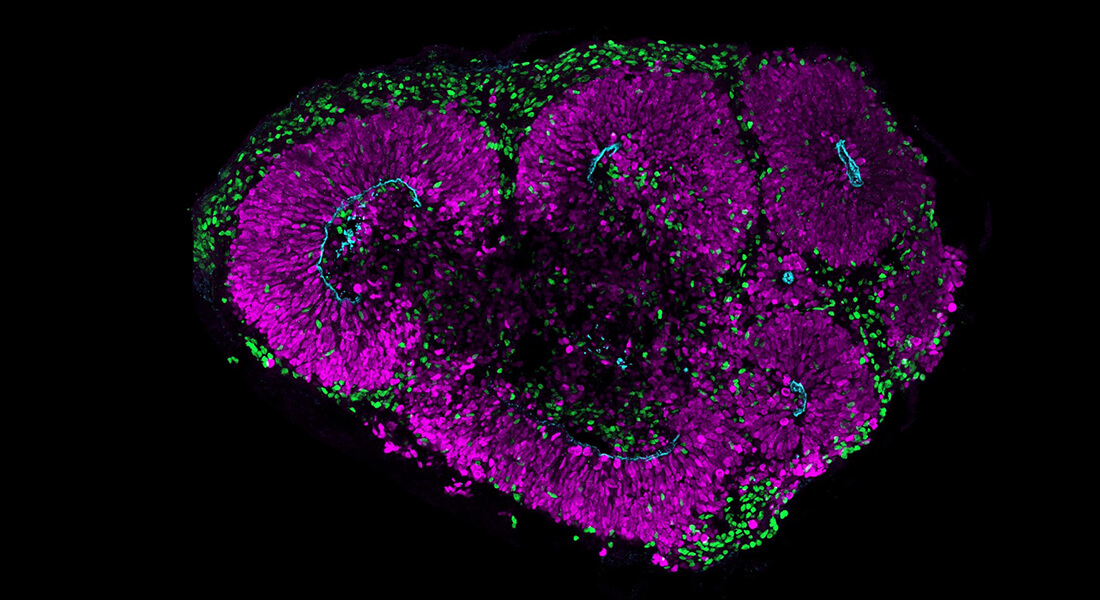
To understand how DDIAS works, we carried out a series of laboratory experiments in human cells. These showed that DDIAS moves to sites of DNA damage during cell division We also used zebrafish and laboratory-grown human brain organoids, sometimes called "mini-brains", to investigate the consequences of losing DDIAS during development. These models confirmed that the absence of DDIAS leads to increased DNA damage in neural stem cells and impaired brain growth.
Finally, we examined cancer cells with BRCA1 and BRCA2 mutations and found that they rely heavily on DDIAS to remain viable.
Which societal challenge does the project seek to address?
The project addresses two major health challenges.
The first is cancer, which remains a leading cause of death worldwide. Many cancers arise because cells accumulate DNA damage and chromosome abnormalities. Understanding how cells manage that damage is essential for developing new treatment strategies.
The second is neurodevelopmental disease. Although genetic testing can now identify many disease-causing mutations, we still do not understand the biological mechanisms behind a large number of rare childhood disorders. Our work sheds light on one such mechanism and helps explain why some developing brains are particularly susceptible to DNA damage.
What are the next stages of the research?
The next priority is to determine whether this newly discovered vulnerability can be translated into a therapeutic opportunity.
We want to understand whether DDIAS itself can be targeted safely and effectively, and whether other components of the same DNA protection pathway might represent better drug targets.
At the same time, we are continuing to investigate why developing brain cells appear to be so dependent on this protective mechanism. One of the most intriguing unanswered questions is why neural progenitor cells, the cells that build the developing brain, seem particularly vulnerable when DDIAS is lost.
Ultimately, we hope this work will lead both to a better understanding of rare childhood disorders and to new strategies for treating BRCA-mutant cancers.
The research collaboration
The article DDIAS shields single-stranded DNA in mitosis and promotes vertebrate brain development was published in the journal Cell on 24 August 2026.
The article is a result of a collaboration between researchers at the Universities of Oxford, Birmingham and Sussex in the UK, Aga Khan University in Pakistan, and the University of Oslo in Norway, led by Dr Andrew Blackford at the Department of Cellular and Molecular Medicine, University of Copenhagen.
Kontakt
Associate Professor, Andrew Blackford
ablackford@sund.ku.dk
Associate Professor, Fena Ochs
fenaochs@sund.ku.dk
Communications Advisor, Dorte Winkel Ravn
dwr@adm.ku.dk